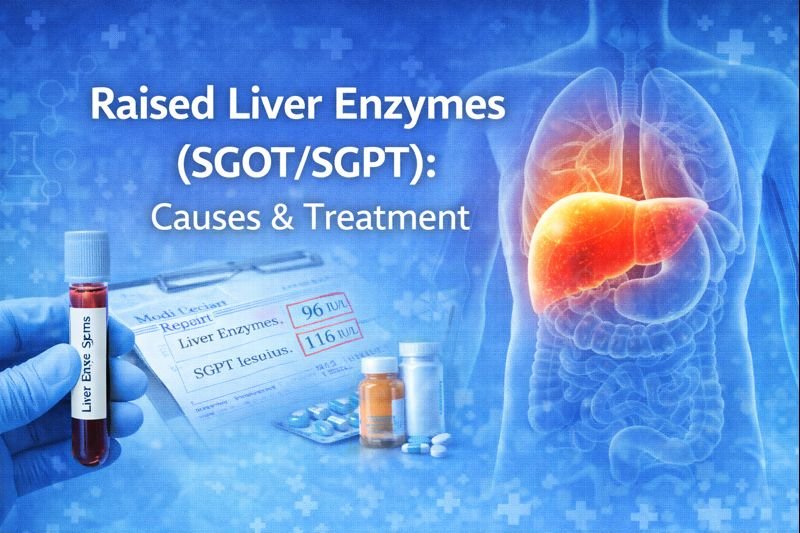
Blood tests showing raised liver enzymes, especially SGOT (AST) and SGPT (ALT), are a common reason for anxiety among patients. While mildly elevated values may be temporary, persistently high liver enzymes can indicate underlying liver or metabolic problems that need proper medical evaluation.
At Gastro Liver Care, patients with abnormal liver function tests are evaluated and managed under the expert care of Dr. Pawan Rawal and Dr. Rajesh Puri, ensuring accurate diagnosis and timely treatment.
This blog explains what SGOT and SGPT are, why they rise, and how elevated liver enzymes are treated medically.
What Are SGOT (AST) and SGPT (ALT)?
SGOT (AST) and SGPT (ALT) are enzymes found inside liver cells. They help in normal metabolic processes.
When liver cells are injured or inflamed, these enzymes leak into the bloodstream, causing their levels to rise in blood tests.
- SGPT (ALT) is more specific to liver damage
- SGOT (AST) may also rise in heart or muscle conditions
Understanding the pattern and degree of elevation is crucial for diagnosis.
What Does “Raised Liver Enzymes” Mean?
Raised liver enzymes usually indicate stress, inflammation, or injury to the liver.
They are not a disease by themselves, but a warning sign that something may be affecting liver health.
Mild elevations may be temporary, while persistent or very high levels need thorough evaluation by a gastroenterologist or hepatologist.
Common Causes of Raised SGOT & SGPT
1. Fatty Liver Disease
One of the most common causes today, especially in people with:
- Obesity
- Diabetes
- Sedentary lifestyle
- High cholesterol
Fatty liver often causes mild to moderate enzyme elevation and may remain silent for years.
2. Alcohol-Related Liver Disease
Regular or excessive alcohol intake can inflame liver cells, leading to raised SGOT and SGPT. In many cases, SGOT rises more than SGPT.
3. Viral Hepatitis
Hepatitis B, C, or acute viral infections can cause significantly high liver enzymes, sometimes several times above normal.
4. Medication-Related Liver Injury
Certain medicines, supplements, or painkillers may stress the liver, especially when taken long-term or without medical supervision.
5. Obesity & Metabolic Syndrome
Raised liver enzymes are frequently seen in people with:
- Central obesity
- Insulin resistance
- High triglycerides
This highlights the strong link between liver health and metabolic disorders.
6. Autoimmune & Genetic Liver Disorders
In some cases, the immune system attacks liver cells, or genetic conditions affect liver function. These need specialized evaluation.
Symptoms Associated with Raised Liver Enzymes
Many patients have no symptoms at all, especially in early stages. When present, symptoms may include:
- Fatigue and weakness
- Loss of appetite
- Abdominal discomfort
- Bloating
- Yellowing of eyes or skin (in advanced cases)
This is why routine blood tests are important for early detection.
How Raised Liver Enzymes Are Diagnosed
At Gastro Liver Care, evaluation includes:
- Detailed medical and lifestyle history
- Repeat liver function tests
- Viral hepatitis screening
- Ultrasound or imaging studies
- Metabolic and autoimmune work-up (if required)
Dr. Pawan Rawal emphasizes identifying the root cause rather than treating enzyme numbers alone.
Treatment of Raised SGOT & SGPT
Treatment depends entirely on the underlying cause.
1. Treating the Root Cause
- Fatty liver: lifestyle modification and medical management
- Alcohol-related disease: alcohol cessation and liver support
- Viral hepatitis: antiviral therapy
- Drug-induced injury: stopping or changing medications
2. Lifestyle & Dietary Correction
Doctors often recommend:
- Balanced, liver-friendly diet
- Weight reduction if overweight
- Regular physical activity
- Avoiding alcohol and unnecessary medications
These steps alone can significantly normalize enzyme levels in many patients.
3. Medical Monitoring & Follow-Up
Regular monitoring ensures:
- Enzyme levels are improving
- Liver damage is not progressing
- Early detection of complications
With expert supervision, most cases can be effectively managed without long-term damage.
Role of Expert Gastroenterologists
Dr. Rajesh Puri, with his extensive experience in advanced gastroenterology and liver disorders, plays a key role in:
- Evaluating complex or unexplained enzyme elevation
- Managing patients with advanced liver disease
- Ensuring accurate diagnosis using advanced investigations
Together, Dr. Pawan Rawal and Dr. Rajesh Puri provide comprehensive liver care—from early enzyme abnormalities to advanced liver conditions.
Multidisciplinary Support at Gastro Liver Care
Patients are also supported by a dedicated clinical team, including Dr. Harsh Jain, Dr. Shubham Mehta, and Dr. Hitesh Panchal, who assist in evaluation, follow-up, and continuity of care under senior specialist supervision.
When Should You See a Doctor for Raised Liver Enzymes?
You should consult a gastroenterologist if:
- SGOT/SGPT levels remain high on repeat testing
- You have risk factors like obesity or alcohol use
- You experience fatigue, jaundice, or abdominal pain
- Liver enzymes are rising rapidly
Early evaluation prevents progression to serious liver disease.
Can Raised Liver Enzymes Be Reversed?
Yes, in most cases. When detected early and managed correctly, liver enzyme elevation is reversible. The liver has a remarkable healing capacity when given the right medical and lifestyle support.
Conclusion
Raised liver enzymes (SGOT/SGPT) are an important signal that your liver needs attention. While they may not always indicate serious disease, ignoring them can lead to long-term complications.
At Gastro Liver Care, expert evaluation and personalized treatment by Dr. Pawan Rawal and Dr. Rajesh Puri ensure that liver enzyme abnormalities are addressed safely, effectively, and at the right time.
If your blood tests show elevated liver enzymes, timely consultation can protect your liver health and prevent future problems.