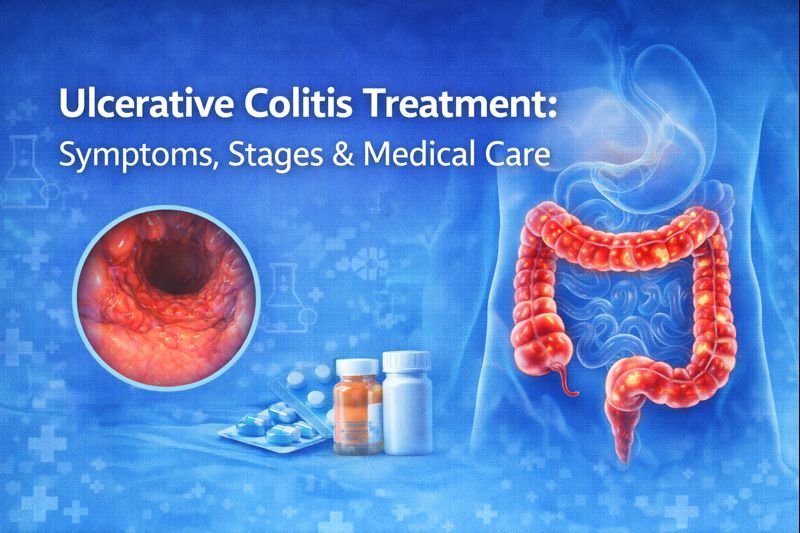
Ulcerative Colitis (UC) is a chronic inflammatory bowel disease (IBD) that affects the inner lining of the large intestine (colon) and rectum. It can significantly impact a person’s quality of life if not diagnosed early and managed properly. With timely medical care, long-term remission and symptom control are very much achievable.
At Gastro Liver Care, patients receive comprehensive and evidence-based treatment for Ulcerative Colitis under the leadership of Dr. Rajesh Puri and Dr. Pawan Rawal, supported by a skilled gastroenterology team.
This blog explains Ulcerative Colitis symptoms, stages, and modern medical treatment options, helping patients understand when to seek care and what to expect from treatment.
What Is Ulcerative Colitis?
Ulcerative Colitis is a long-term inflammatory condition in which the immune system mistakenly attacks the lining of the colon. Unlike IBS, UC causes visible inflammation and ulcers, which can be detected during a colonoscopy.
The disease typically follows a relapsing–remitting pattern, meaning periods of flare-ups are followed by remission phases.
Common Symptoms of Ulcerative Colitis
Symptoms can vary depending on disease severity and extent of colon involvement. Common signs include:
- Persistent diarrhea
- Blood or mucus in stools
- Abdominal pain and cramping
- Urgency to pass stools
- Fatigue and weakness
- Unintended weight loss
- Anemia due to chronic blood loss
During severe flares, symptoms can worsen rapidly and require immediate medical attention.
Stages and Types of Ulcerative Colitis
Ulcerative Colitis is classified based on how much of the colon is affected and disease severity.
Based on Location
- Ulcerative Proctitis – limited to the rectum
- Left-sided Colitis – affects rectum and left colon
- Extensive Colitis / Pancolitis – involves the entire colon
Based on Severity
- Mild UC – occasional diarrhea with mild bleeding
- Moderate UC – frequent stools, abdominal pain, fatigue
- Severe UC – continuous bleeding, fever, weight loss, anemia
Understanding the stage is critical for choosing the right treatment strategy.
Why Early Diagnosis Matters
Early diagnosis of Ulcerative Colitis helps:
- Prevent complications like colon damage
- Reduce hospitalization risk
- Improve long-term remission rates
- Minimize steroid dependence
At Gastro Liver Care, Dr. Rajesh Puri emphasizes early colonoscopic evaluation and accurate disease staging to ensure optimal outcomes.
Diagnosis of Ulcerative Colitis
Diagnosis typically involves:
- Detailed medical history and symptom assessment
- Blood tests (to check inflammation and anemia)
- Stool tests (to rule out infections)
- Colonoscopy with biopsy – the gold standard for diagnosis
Advanced endoscopic expertise plays a key role in differentiating UC from other gastrointestinal conditions.
Medical Treatment for Ulcerative Colitis
Treatment is tailored based on disease severity, extent, and patient response.
1. Anti-Inflammatory Medications
Used as first-line therapy to reduce inflammation and control symptoms.
2. Immunomodulators
Help suppress abnormal immune responses in moderate to severe cases.
3. Biologic Therapy
Advanced targeted treatments for patients with moderate to severe Ulcerative Colitis or steroid-dependent disease.
4. Steroids (Short-Term Use)
Used only during acute flares to quickly control inflammation.
Dr. Pawan Rawal focuses on long-term disease control while minimizing side effects, ensuring patients receive the safest and most effective therapy.
Role of Diet and Lifestyle in UC Management
While diet alone cannot cure Ulcerative Colitis, it plays a supportive role in managing symptoms:
- Avoid trigger foods during flares
- Maintain adequate nutrition
- Stay hydrated
- Manage stress and sleep
Patients at Gastro Liver Care receive individualized dietary and lifestyle guidance as part of holistic care.
Advanced Endoscopic & Interventional Care
With extensive experience in advanced gastroenterology, Dr. Pawan Rawal and Dr. Rajesh Puri plays a crucial role in:
- Disease severity assessment
- Managing complications
- Monitoring treatment response
- Early detection of dysplasia or cancer risk
Regular surveillance is essential for patients with long-standing Ulcerative Colitis.
Multidisciplinary Team at Gastro Liver Care
In addition to senior specialists, patients are supported by a dedicated team that includes Dr. Harsh Jain, Dr. Shubham Mehta, and Dr. Hitesh Panchal, who contribute to patient evaluation, monitoring, and continuity of care under expert supervision.
This team-based approach ensures safe, coordinated, and patient-focused treatment.
Living with Ulcerative Colitis
With proper medical care:
- Many patients achieve long-term remission
- Hospitalizations can be reduced
- Normal work and social life is possible
Regular follow-ups and adherence to treatment are essential for maintaining disease control.
When Should You Consult a Gastroenterologist?
Seek specialist care if you experience:
- Blood in stools
- Chronic diarrhea
- Abdominal pain with weight loss
- Symptoms not responding to routine treatment
Early expert intervention can significantly improve outcomes.
Conclusion
Ulcerative Colitis is a chronic but manageable condition when treated with the right medical strategy. At Gastro Liver Care, patients benefit from the extensive expertise of Dr. Rajesh Puri and Dr. Pawan Rawal, supported by a skilled clinical team and advanced diagnostic facilities.
With personalized treatment plans, modern therapies, and long-term monitoring, Gastro Liver Care remains a trusted center for Ulcerative Colitis treatment and comprehensive IBD care.
If you or a loved one is experiencing symptoms suggestive of Ulcerative Colitis, timely consultation can make a meaningful difference in long-term health and quality of life.