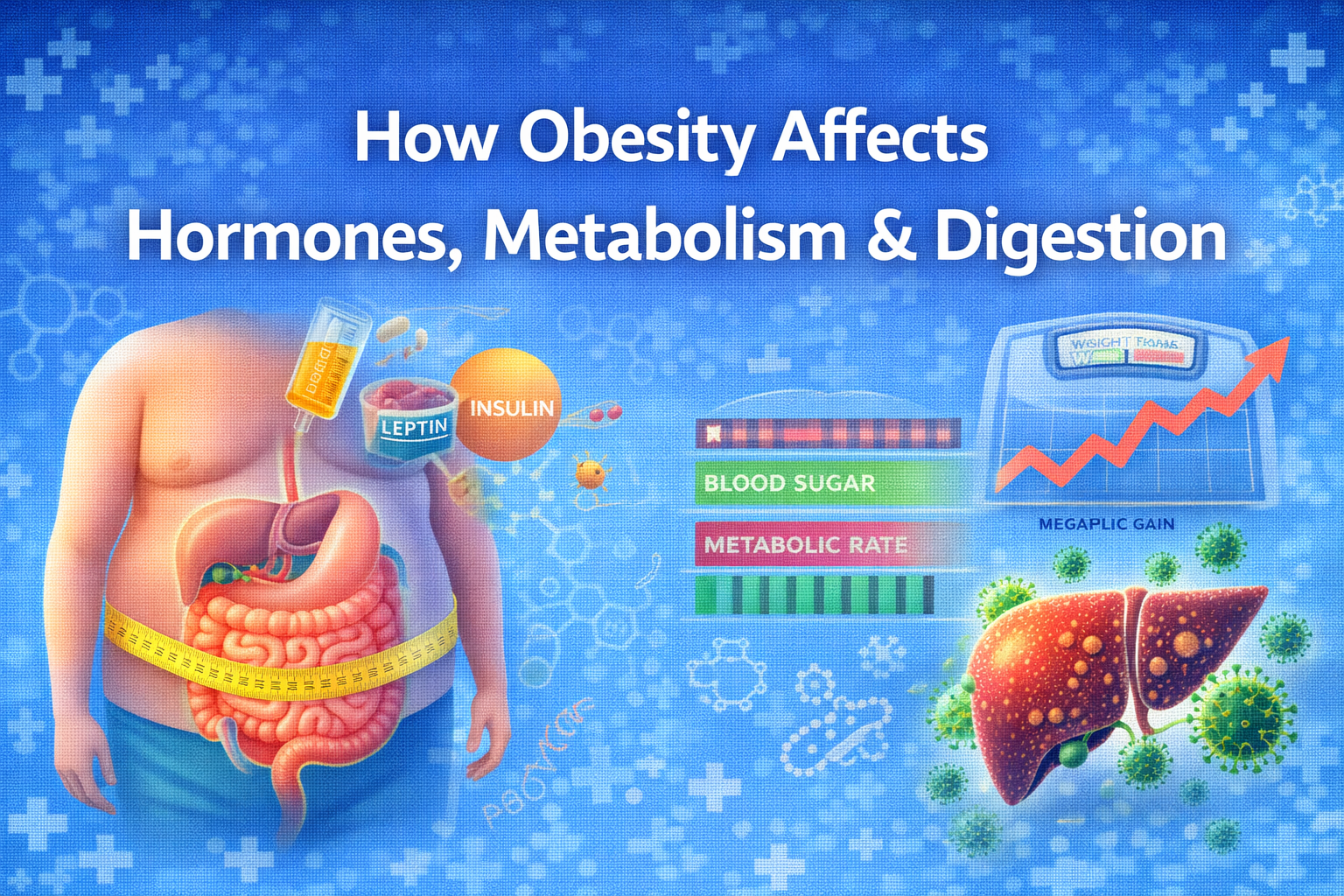
Obesity is not just about excess body weight—it is a complex medical condition that affects nearly every system in the body. Beyond visible weight gain, obesity disrupts hormonal balance, slows metabolism, and impairs digestive health. Understanding these connections is essential for achieving sustainable results.
At Gastro Liver Care, obesity is treated as a medical condition requiring structured evaluation and long-term management. Under the expert guidance of Dr. Pawan Rawal and Dr. Rajesh Puri, patients receive comprehensive care that addresses the root causes of weight gain—not just the symptoms.
If you are considering weight loss treatment in Gurgaon, understanding how obesity affects your body internally can help you make informed decisions.
1. Obesity and Hormonal Imbalance
Hormones regulate hunger, fat storage, metabolism, and energy levels. In obesity, several key hormones become dysregulated.
Leptin Resistance
Leptin is the hormone responsible for signaling fullness. In obese individuals:
- Leptin levels are high
- The brain becomes resistant to leptin signals
- Hunger persists despite adequate food intake
This condition makes weight loss difficult without medical intervention.
Insulin Resistance
Insulin controls blood sugar levels. Obesity can lead to:
- Increased insulin levels
- Reduced insulin sensitivity
- Higher risk of type 2 diabetes
Insulin resistance also promotes the storage of fat, particularly around the abdomen.
Cortisol & Stress Hormones
Chronic stress combined with obesity raises cortisol levels, which:
- Encourages fat accumulation
- Increases cravings for unhealthy foods
- Slows metabolism
Dr. Pawan Rawal often emphasizes that obesity is not simply about calorie intake—it is heavily influenced by hormonal regulation.
2. Obesity and Metabolism
Metabolism determines how efficiently the body burns calories for energy. In obesity:
Slower Basal Metabolic Rate (BMR)
Repeated dieting or prolonged obesity can:
- Reduce calorie-burning capacity
- Cause weight loss plateaus
- Increase fat storage efficiency
This explains why many people struggle to lose weight even with exercise.
Muscle Loss & Fat Gain
Poorly planned weight loss methods can lead to a reduction in muscle mass. Less muscle means:
- Lower metabolic rate
- Reduced fat-burning ability
Medical supervision ensures muscle preservation while promoting healthy fat loss.
3. Obesity and Digestive Health
From a gastroenterology perspective, obesity significantly impacts digestion.
Fatty Liver Disease
Excess fat accumulation in the liver can lead to:
- Elevated liver enzymes
- Inflammation
- Cirrhosis if untreated
Fatty liver is now one of the most common obesity-related complications.
Acid Reflux (GERD)
Abdominal fat increases pressure on the stomach, causing:
- Acid reflux
- Heartburn
- Chronic acidity
Irritable Bowel Syndrome (IBS) & Bloating
Obesity alters gut bacteria (microbiome), leading to:
- Excess gas production
- Digestive discomfort
- Irregular bowel movements
Dr. Rajesh Puri, with his extensive experience in advanced gastroenterology, highlights that treating gut health is essential for effective weight management.
4. The Gut–Hormone–Metabolism Connection
The digestive system and hormonal system are closely linked. Poor gut health can:
- Disrupt hunger hormones
- Increase inflammation
- Affects insulin sensitivity
This cycle makes weight loss harder unless the underlying digestive imbalance is corrected.
Why Gym & Diet Alone Often Fail
Many patients:
- Exercise regularly
- Follow calorie-restricted diets
- Still fail to achieve sustainable weight loss
This happens because hormonal imbalance, metabolic slowdown, and digestive issues remain untreated.
That’s why structured weight loss treatment in Gurgaon should include medical evaluation, not just exercise recommendations.
Medical Approach to Weight Loss
At Gastro Liver Care, obesity management focuses on:
- Identifying hormonal imbalances
- Evaluating liver and gut health
- Personalized nutrition plans
- Sustainable lifestyle modifications
- Regular medical monitoring
This ensures long-term results rather than temporary weight reduction.
When Should You Seek Medical Help?
Consult a specialist if:
- Weight gain continues despite exercise
- You have fatty liver or elevated liver enzymes
- You experience persistent bloating or acidity
- You feel fatigued or have insulin resistance
Early intervention prevents serious complications.
Conclusion
Obesity affects much more than body appearance—it disrupts hormones, slows metabolism, and damages digestive health. Treating obesity effectively requires a comprehensive, medically supervised approach.
At Gastro Liver Care, expert care by Dr. Pawan Rawal and Dr. Rajesh Puri ensures that weight management addresses the root causes, including metabolic and digestive factors.
If you are looking for effective and sustainable weight loss treatment in Gurgaon, a medically guided plan can help restore hormonal balance, improve digestion, and support long-term health.